Genomics: DNA Sequencing, Genome Analysis & Biotechnology
Explore genomics, whole genome sequencing, comparative genomics, functional genomics, bioinformatics, and genomic data analysis in modern biotechnology research.
Genomics is the comprehensive study of genomes, including their structure, sequence, function, regulation, and evolution. Advances in DNA sequencing, molecular biology, and bioinformatics have enabled researchers to investigate genetic information on an unprecedented scale. From understanding microbial diversity to studying gene regulation and complex biological systems, genomics provides a foundation for modern life science research.
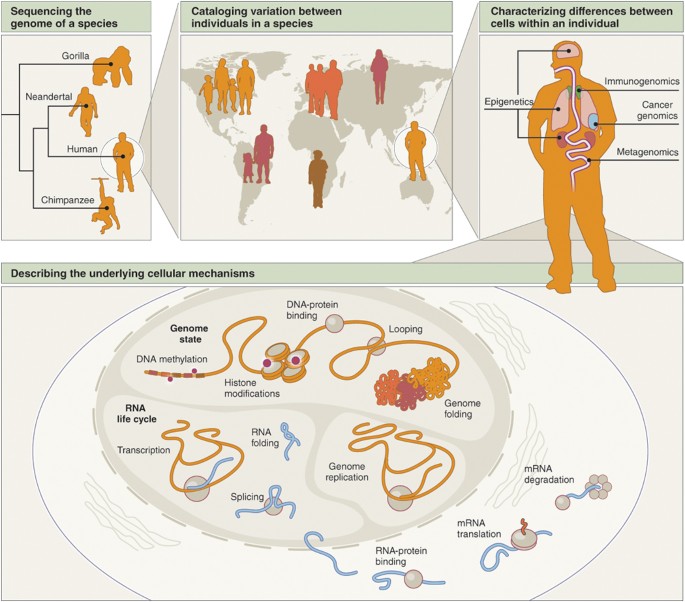
What Is Genomics?
A genome is the complete set of genetic material associated with an organism or biological system. In most organisms, this information is encoded in DNA. Some viruses have RNA genomes. A genome contains genes and extensive noncoding regions that contribute to chromosome organization, gene regulation, and other biological processes.
Genomics examines genetic material at a genome-wide scale rather than focusing exclusively on one gene at a time. It can involve sequencing entire genomes, comparing genomes between organisms, identifying genetic variation, and examining the relationship between DNA sequences and biological functions.
Unlike traditional genetics, which often investigates individual genes and inheritance patterns, genomics emphasizes the broader organization and interactions of genetic elements. The two fields overlap and complement each other.
Genome Structure and Genetic Information
Genomes contain different types of sequences that work within complex molecular and cellular systems. Their organization varies between bacteria, archaea, plants, animals, fungi, and other organisms.
Genes and Coding Sequences
Genes contain information used to produce functional RNA molecules and, for protein-coding genes, instructions that contribute to protein synthesis. Gene structure and organization differ across biological systems.
Noncoding DNA
Noncoding regions include regulatory sequences, introns, repetitive DNA, and other elements. Some participate in controlling gene activity, chromosome organization, and genome stability.
Chromosomes and Genome Organization
Genetic material is organized into chromosomes or chromosome-like structures. Chromosome number, size, and architecture vary between organisms and provide important context for genome assembly and analysis.
Genetic Variation
Differences in DNA can include single-nucleotide variants, insertions, deletions, and larger structural changes. Studying this variation helps researchers examine genetic diversity, evolution, and biological differences.
DNA Sequencing and Whole Genome Sequencing
DNA sequencing determines the order of nucleotide bases in a DNA molecule. Modern sequencing technologies can analyze selected genomic regions or generate data covering a large proportion of an organism's genome.
Whole genome sequencing (WGS) aims to determine the sequence of the genome, subject to the technology, sample quality, coverage, and analytical limitations of the project. It can reveal sequence variation, support genome assembly, and provide data for comparative genomic studies.
Next-generation sequencing (NGS) platforms generate large quantities of sequence data in parallel. Long-read technologies can provide additional information about repetitive regions, structural variation, and genome organization, while short-read methods are widely used for many sequencing applications.

Common Genomic Sequencing Approaches
| Technology or approach | What it examines | Typical research uses |
|---|---|---|
| Whole genome sequencing | Genome-wide DNA sequence | Genome characterization, variation analysis, comparative studies |
| Whole exome sequencing | Primarily protein-coding regions | Targeted investigation of coding variation |
| Targeted sequencing | Selected genes or genomic regions | Focused analysis of predefined sequences |
| Short-read sequencing | Many relatively short DNA fragments | Variant calling, microbial genomics, genome resequencing |
| Long-read sequencing | Longer DNA molecules | Genome assembly, repetitive regions, structural variation |
The most suitable approach depends on the biological question, reference genome availability, desired resolution, sequencing coverage, sample type, and computational resources.
From DNA Samples to Genomic Insights
Genomic analysis is a multi-stage process. Laboratory measurements generate sequencing data, while computational workflows transform those data into a representation that can be evaluated scientifically.
1. Sample Preparation
DNA is extracted and evaluated for quantity, purity, and integrity. Preparation requirements depend on the sample type, sequencing platform, and study design.
2. Library Preparation and Sequencing
DNA fragments or molecules are prepared according to the selected technology. A sequencing instrument then produces reads representing portions of the genetic material.
3. Quality Control and Data Processing
Bioinformatics pipelines assess read quality, remove or flag problematic data where appropriate, and prepare the reads for alignment or genome assembly.
4. Genome Analysis and Interpretation
Researchers examine assembled sequences, compare reads against reference genomes, identify variants, and interpret findings in the context of the study question.
Comparative Genomics: Understanding Evolution and Diversity
Comparative genomics investigates similarities and differences between the genomes of different organisms, populations, or strains. By comparing sequences and genome organization, scientists can study evolutionary relationships, conserved genetic elements, gene-family expansion, and changes in genome architecture.
One important concept is sequence conservation. Regions that remain similar across evolutionary lineages may provide clues about biological constraints or shared functions. However, sequence similarity alone does not prove that two regions have identical functions.
Comparative genomic analysis can also help identify genetic rearrangements, gene gain or loss, horizontal gene transfer in microorganisms, and patterns of genetic diversity.
Microbial Genomics
Genome comparisons can characterize bacterial and fungal diversity, investigate evolutionary relationships, and examine genetic differences between isolates.
Plant and Agricultural Genomics
Researchers compare plant genomes to investigate genome evolution, genetic diversity, and the molecular basis of selected traits relevant to crop research.
Evolutionary Genomics
Genomic evidence can be used to reconstruct evolutionary histories and study how genetic sequences change over generations.
Metagenomics
Metagenomics analyzes genetic material recovered from mixed biological communities, enabling research into microbial composition and functional potential without requiring every organism to be cultured separately.
Functional Genomics and Gene Regulation
Structural genomics describes the sequence and organization of genetic material. Functional genomics investigates how genes and other genomic elements contribute to biological processes, including how they are expressed, regulated, and connected to cellular functions.
Researchers can combine RNA sequencing, gene perturbation, chromatin analysis, and other genome-wide techniques to investigate gene activity. These approaches help distinguish the presence of a DNA sequence from the biological activity associated with it.
- Transcriptomics: examines RNA molecules expressed in a biological sample.
- Epigenomics: studies genome-wide patterns of epigenetic features and regulatory modifications.
- Chromatin accessibility analysis: investigates regions of chromatin that are accessible to molecular interactions.
- Genome editing research: investigates the consequences of selected genetic changes.
- Gene network analysis: explores relationships between genes, regulatory elements, and molecular pathways.
Integrating these methods can provide a broader understanding of how genomic information is regulated across cell types, developmental stages, and experimental conditions.

Bioinformatics in Genomics Research
Genomic sequencing produces large datasets that require specialized computational methods. Bioinformatics combines biology, statistics, computer science, and data management to organize and analyze these data.
Common tasks include read alignment, genome assembly, variant detection, sequence annotation, phylogenetic analysis, and visualization of genomic features.
Reference databases and analysis tools also help researchers compare new sequences with previously characterized genomes. Reproducible workflows, version-controlled software, appropriate statistical methods, and transparent reporting improve the reliability and reuse of genomic results.
Examples of Genomics Data Analysis
- Genome assembly: reconstructing longer genomic sequences from sequencing reads.
- Sequence alignment: comparing reads or assembled sequences with a reference.
- Variant calling: identifying sequence differences using suitable computational methods.
- Genome annotation: identifying genes and assigning potential functions to genomic features.
- Phylogenetics: using molecular data to investigate evolutionary relationships.
Applications of Genomics in Modern Biotechnology
Genomics has become an important research discipline across microbiology, plant science, biotechnology, evolutionary biology, and molecular biology. Its applications depend on the organism studied, the technology selected, and the quality of the data.
Biotechnology and Synthetic Biology
Genomic information can support the characterization of biological systems, the selection of genetic components, and the design of research strategies involving engineered biological systems.
Microbiology and Microbial Diversity
Whole genome sequencing and comparative genomics can help characterize microorganisms, examine population diversity, and investigate the genetic basis of microbial traits.
Plant Science and Agricultural Research
Genome analysis contributes to research into plant evolution, gene families, genetic diversity, and the molecular mechanisms associated with plant characteristics.
Cell and Molecular Biology
Genome-wide methods can be integrated with transcriptomics, proteomics, and cellular experiments to explore molecular relationships and biological processes.
Scientific Video: How Does Whole Genome Sequencing Work?
From a Biological Sample to Genomic Data
Explore this educational animation from the NHS Genomics Education Programme to learn how whole genome sequencing moves from sample preparation to sequencing, bioinformatics, and interpretation.
Watch: Whole Genome Sequencing — From Sample to Report ↗This resource opens on the original educational website. Linking directly to the source keeps the blog lightweight and avoids an unverified video embed.
Challenges and Considerations in Genomics
Although sequencing technologies have advanced significantly, genomic research still involves scientific and computational challenges. Generating sequence data is only one part of the process; interpreting the results correctly requires suitable methods and biological context.
- Complex genomic regions: repetitive sequences and structural variation can make assembly and alignment difficult.
- Data volume: large sequencing projects require adequate computing, storage, and data management resources.
- Reference limitations: a reference genome may not represent every sequence present in a sample or population.
- Interpretation: not every detected variant has a known biological function or measurable effect.
- Reproducibility: documented pipelines, quality controls, and transparent analytical decisions are essential.
- Data governance: genomic datasets may contain sensitive information, making appropriate consent, access controls, and responsible data sharing important.
Frequently Asked Questions About Genomics
What is genomics in simple terms?
Genomics is the study of an organism's complete genetic material, including the structure, sequence, function, and interactions of its genes and other genomic elements.
What is the difference between genetics and genomics?
Genetics often focuses on individual genes and inheritance, while genomics examines genomes on a broader scale, including genome-wide sequence patterns and relationships between genetic elements.
What is whole genome sequencing?
Whole genome sequencing is an approach for determining the DNA sequence across an organism's genome. The completeness and accuracy of the resulting sequence depend on the technology, sample, coverage, and analysis workflow.
Why is bioinformatics important in genomics?
Bioinformatics provides the computational methods needed to process, organize, compare, and interpret the large datasets generated by genomic sequencing technologies.
What is the difference between genomics and transcriptomics?
Genomics studies DNA and genome organization. Transcriptomics examines the RNA molecules produced in a sample under particular conditions, providing information about gene expression.
What is comparative genomics used for?
Comparative genomics uses genome comparisons to investigate evolutionary relationships, genetic diversity, conserved sequences, gene-family changes, and differences between organisms.
Further Reading and Scientific Resources
Explore these educational and scientific resources for additional information on genome sequencing, functional genomics, and genomic data analysis.
Keywords for Genomics