How AI Is Transforming Modern Biotechnology Research
Discover how artificial intelligence is transforming biotechnology research through machine learning, genomics, proteomics, protein structure prediction, drug discovery and computational biology
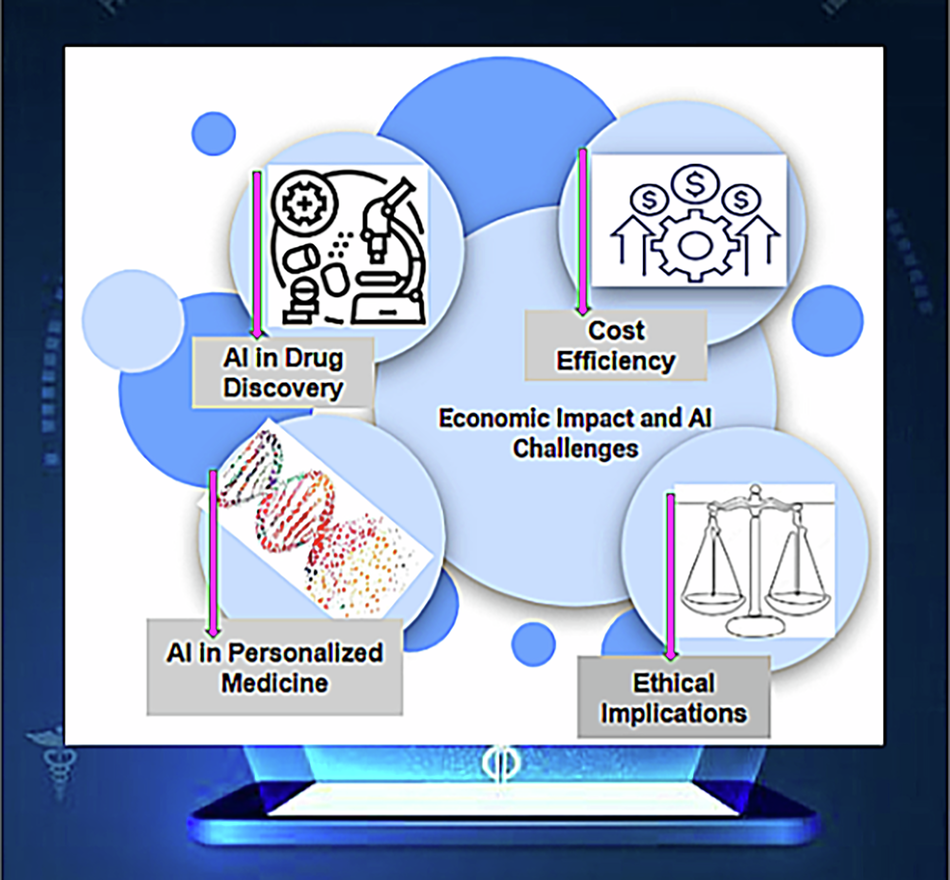
Artificial intelligence (AI) is becoming an increasingly important component of modern biotechnology research. By combining machine learning, deep learning, computational biology and advanced data analytics, AI is changing how scientists investigate biological systems, analyze molecular structures, discover potential biomolecules and interpret complex experimental datasets. From genomics and proteomics to synthetic biology and drug discovery research, artificial intelligence is creating new opportunities to accelerate scientific investigation and improve the interpretation of biological information.
The Growing Role of Artificial Intelligence in Biotechnology
Biotechnology research generates enormous volumes of complex data. Genomic sequencing, transcriptomics, proteomics, metabolomics, microscopy and high-throughput screening technologies produce datasets that can contain millions of measurements. Extracting meaningful biological information from these datasets requires sophisticated analytical methods.
Traditional computational approaches remain essential, but they can face limitations when researchers need to identify complex relationships across large, multidimensional datasets. Artificial intelligence offers additional analytical capabilities by learning patterns from existing data and applying those patterns to new biological observations.
Machine learning algorithms can recognize molecular patterns, classify biological samples, predict molecular properties and identify relationships that may be difficult to detect using conventional statistical approaches alone.

The integration of AI into biotechnology does not replace experimental biology. Instead, it complements laboratory research by helping scientists formulate hypotheses, prioritize experimental candidates, analyze results and identify promising directions for further investigation.
How AI Works in Modern Biological Research
Artificial intelligence encompasses several computational methods that enable systems to process information, recognize patterns and generate predictions. In biotechnology, these methods are particularly useful because biological systems involve complex interactions between genes, proteins, metabolites, cells and environmental factors.
Machine Learning in Biotechnology
Machine learning (ML) is a branch of artificial intelligence that enables algorithms to learn patterns from datasets rather than relying exclusively on explicitly programmed rules. Researchers use supervised learning, unsupervised learning and reinforcement learning to investigate different biological problems.
Supervised learning uses labeled datasets to train models for tasks such as protein classification, genomic sequence interpretation and molecular property prediction. Unsupervised learning identifies hidden patterns or groups within datasets without requiring predefined labels. Reinforcement learning explores decision-making through interactions with an environment and feedback mechanisms.
Deep Learning and Neural Networks
Deep learning uses multilayered artificial neural networks to identify complex relationships in large datasets. These models are especially useful for analyzing biological sequences, protein structures, medical imaging datasets and high-dimensional molecular measurements.
Convolutional neural networks (CNNs), recurrent neural networks (RNNs), transformers and graph neural networks are among the architectures applied to different biotechnology research problems.
Generative Artificial Intelligence
Generative AI models go beyond classification and prediction. They can learn patterns in biological data and generate new candidate sequences, molecular structures or other biological designs. Researchers are exploring these capabilities in protein engineering, enzyme design, synthetic biology and computational molecular discovery.
Scientific perspective: AI predictions are computational hypotheses, not automatic experimental validation. Their reliability depends on training data quality, model architecture, biological context and independent experimental confirmation.
AI in Genomics: Understanding Genetic Information

Genomics is one of the biotechnology fields experiencing significant transformation through artificial intelligence. Modern sequencing technologies produce extensive genomic datasets containing information about DNA sequences, genetic variation, gene expression and regulatory elements.
AI algorithms can analyze these datasets to identify patterns associated with gene function, genomic organization and biological variation. Deep learning models can also process DNA sequences to investigate potential transcription factor binding sites, regulatory regions and sequence-specific biological characteristics.
Applications of AI in Genomic Research
- Genomic sequence analysis: Machine learning models can identify patterns in DNA sequences and classify genomic regions.
- Variant interpretation: Computational models can help prioritize genetic variants for further functional investigation.
- Gene expression analysis: AI can identify expression patterns across different tissues, cell types and experimental conditions.
- Regulatory genomics: Deep learning can investigate promoters, enhancers and transcriptional regulatory elements.
- Comparative genomics: Computational methods can help identify similarities and differences between genomic sequences.
AI-powered genomic analysis is also contributing to single-cell sequencing research. Single-cell RNA sequencing generates detailed expression profiles for individual cells, allowing researchers to investigate cellular heterogeneity and identify distinct cell populations.
Machine learning approaches such as clustering, dimensionality reduction and cell-type classification help organize these complex datasets and identify biological patterns that may otherwise remain difficult to interpret.
AI in Proteomics: Transforming Protein Research

Proteomics involves the large-scale study of proteins, including their abundance, structure, function, interactions and post-translational modifications. Because proteins are dynamic and structurally complex molecules, understanding the proteome requires the integration of experimental measurements and computational analysis.
Artificial intelligence is helping researchers interpret mass spectrometry data, investigate protein sequences, predict protein structures and explore molecular interactions.
Protein Structure Prediction
One of the most influential developments in computational biology has been the application of deep learning to protein structure prediction. Protein structure determines many aspects of molecular function, including binding properties, stability and interactions with other biological molecules.
The AlphaFold project demonstrated how deep learning can predict highly accurate protein structures from amino acid sequences for many proteins. AlphaFold 2 represented a major milestone, while AlphaFold 3 expanded the modeling of interactions involving proteins, nucleic acids, small molecules and other biological components.
Protein-Protein Interaction Analysis
AI-based computational approaches are increasingly used to investigate protein-protein interactions and molecular networks. Graph neural networks and other machine learning architectures can represent biological interactions as interconnected systems, helping researchers explore functional relationships between proteins.
Mass Spectrometry and Proteomics Data
Machine learning can support peptide identification, spectral interpretation, protein quantification and the analysis of complex proteomics datasets. These methods can improve data processing workflows and assist in prioritizing molecular candidates for additional experimental investigation.


AI in Drug Discovery and Molecular Design
The discovery and development of new molecular compounds involves numerous stages, including target identification, molecular screening, compound optimization and experimental validation. Artificial intelligence is increasingly being investigated as a tool for supporting these processes.
Machine learning models can analyze chemical structures, estimate molecular properties, identify patterns in screening datasets and help researchers prioritize compounds for further investigation.
Virtual Screening and Molecular Docking
Virtual screening uses computational methods to evaluate large collections of chemical compounds against selected biological targets. AI models can help prioritize candidate molecules based on predicted binding properties and other molecular characteristics.
Molecular docking algorithms estimate how small molecules may interact with protein binding sites. When combined with machine learning, these approaches can help researchers explore molecular recognition and identify potential candidates for experimental evaluation.
Generative AI for Molecular Design
Generative models can propose new molecular structures based on learned chemical patterns and defined design objectives. Researchers are investigating these methods to explore chemical space, optimize molecular properties and generate candidate compounds with specific characteristics.
However, computational predictions must be evaluated through biochemical experiments, structural analysis and appropriate validation workflows. Predicted binding affinity or molecular properties alone do not establish biological activity.
AI and Synthetic Biology: Designing Biological Systems

Synthetic biology combines engineering principles with biological science to design, construct and investigate biological systems. Artificial intelligence provides additional computational tools for analyzing biological circuits, optimizing genetic constructs and exploring the behavior of engineered organisms.
In synthetic biology, researchers frequently work with complex networks of genes, promoters, regulatory sequences and cellular pathways. AI can help analyze interactions between these components and predict how modifications may influence system behavior.
Major AI Applications in Synthetic Biology
- Predicting gene expression from regulatory DNA sequences.
- Designing and optimizing synthetic genetic circuits.
- Analyzing metabolic pathways and cellular processes.
- Exploring enzyme sequence and function relationships.
- Supporting computational protein and enzyme engineering.
- Investigating microbial production systems and biomanufacturing processes.
These capabilities are relevant to industrial biotechnology, agricultural biotechnology, microbial engineering and the development of new biological production platforms.
AI in Single-Cell Biology and Spatial Transcriptomics
Single-cell technologies have transformed biological research by allowing scientists to examine gene expression at the level of individual cells rather than relying exclusively on bulk tissue measurements.
Single-cell RNA sequencing (scRNA-seq) generates high-dimensional datasets that require specialized computational approaches. AI and machine learning are used to identify cell populations, investigate cellular states, analyze gene expression patterns and explore relationships between different cell types.
Cell Clustering and Classification
Unsupervised learning techniques help group cells according to similarities in their gene expression profiles. These clusters can then be investigated to identify distinct cellular populations and biological states.
Spatial Transcriptomics
Spatial transcriptomics combines gene expression information with spatial coordinates, allowing researchers to study where molecular activity occurs within tissues. AI-based image analysis and computational models can integrate spatial measurements with histological images and other molecular datasets.
This integration helps investigate tissue organization, cellular neighborhoods and interactions between different cell populations.

Important AI Technologies Used in Biotechnology Research
Different artificial intelligence architectures are suited to different types of biological data. Selecting an appropriate model depends on the scientific objective, available datasets and required computational performance.
| AI Technology | Biotechnology Application | Research Purpose |
|---|---|---|
| Machine Learning | Genomics and proteomics | Classification and prediction |
| Deep Learning | Protein structures and DNA sequences | Complex pattern recognition |
| Transformers | Protein and genomic language models | Sequence representation and prediction |
| Graph Neural Networks | Protein interaction networks | Modeling molecular relationships |
| Generative AI | Protein and molecular design | Generating candidate structures |
| Computer Vision | Microscopy and cellular imaging | Image classification and segmentation |
| Reinforcement Learning | Experimental optimization | Sequential decision-making |
AI-Powered Biotechnology: Benefits and Research Opportunities
01. Faster Data Analysis
AI can process large genomic, proteomic and molecular datasets, helping researchers identify relevant patterns more efficiently.
02. Improved Pattern Recognition
Machine learning can reveal complex relationships between biological variables that may be difficult to identify through conventional analysis.
03. Molecular Prediction
Predictive models can support the investigation of protein structures, molecular interactions and biological properties.
04. Experimental Prioritization
AI can help rank candidate sequences, proteins and compounds for further laboratory investigation.
05. Multi-Omics Integration
Computational models can combine genomic, transcriptomic, proteomic and metabolomic measurements.
06. Advanced Biological Design
Generative AI can support the exploration of new protein sequences, molecular structures and engineered biological systems.
Challenges and Limitations of AI in Biotechnology
Despite its considerable potential, artificial intelligence introduces important challenges that researchers must consider before integrating computational predictions into scientific workflows.
Data Quality and Availability
AI models depend on the quality, diversity and reliability of their training datasets. Incomplete datasets, measurement errors, inconsistent experimental protocols and biased sampling can influence model performance.
Model Interpretability
Some deep learning systems operate as complex mathematical models with limited interpretability. Understanding why a model generates a particular prediction is especially important in biological research, where mechanistic explanations are often required.
Reproducibility and Independent Validation
Computational results must be reproducible and evaluated using appropriate independent datasets. Experimental validation remains essential for determining whether predicted molecular interactions, protein functions or biological mechanisms are supported by actual observations.
Computational Resources
Training and deploying advanced AI models can require substantial computing power, specialized hardware, large datasets and technical expertise. These requirements may limit access for smaller research laboratories and institutions.
The Importance of Human Scientific Expertise
AI should be considered a complementary research tool rather than a replacement for biological expertise. Scientists remain essential for defining research questions, evaluating computational assumptions, interpreting results and designing experiments that test model predictions.
The Future of Artificial Intelligence in Biotechnology
The relationship between artificial intelligence and biotechnology is expected to become increasingly integrated as computational methods continue to improve. New developments in biological foundation models, multimodal AI and generative systems are expanding the types of scientific problems that can be investigated computationally.
Biological Foundation Models
Foundation models trained on extensive biological datasets are being developed to learn general representations of DNA, RNA, proteins and other biological information. These models can be adapted to multiple research tasks, including sequence classification, functional prediction and molecular design.
Multimodal Biological AI
Biological systems are described through different types of information, including sequences, structures, images and experimental measurements. Multimodal AI aims to integrate these different data types into unified computational frameworks.
AI-Driven Laboratory Automation
The integration of AI with robotic laboratory systems and automated experimentation is another emerging research direction. Automated platforms can generate experimental data, while computational systems analyze the results and help prioritize subsequent experiments.
Digital Biology and Predictive Models
Researchers are also exploring computational representations of biological systems that integrate molecular, cellular and experimental information. These approaches could support more detailed investigations of complex biological processes and improve the design of future experiments.

AI and the Integration of Multi-Omics Research
One of the most promising areas of AI-driven biotechnology is multi-omics integration. Biological processes cannot always be understood through a single molecular layer. Genomic information, gene expression, protein abundance and metabolite profiles represent different but interconnected aspects of biological activity.
Multi-omics research combines these datasets to develop a more comprehensive understanding of biological systems. Artificial intelligence can support this integration by identifying relationships between different molecular measurements.
For example, researchers may combine genomic variation with transcriptomic and proteomic measurements to investigate how genetic differences influence gene expression and protein abundance. Additional metabolomic data can provide insights into downstream biochemical processes.
Machine learning, network analysis and dimensionality reduction are among the computational methods used to explore these complex relationships. The resulting models can help generate new hypotheses about biological pathways, molecular interactions and cellular regulation.
Conclusion: A New Era of AI-Driven Biotechnology Research
Connecting Artificial Intelligence with Biological Discovery
Artificial intelligence is transforming modern biotechnology by introducing advanced methods for analyzing biological data, predicting molecular properties, investigating protein structures and exploring complex genomic information.
Its influence extends across genomics, proteomics, synthetic biology, single-cell research, molecular design and multi-omics integration. Machine learning and generative AI are helping researchers approach increasingly complex scientific questions through computational methods.
As biological datasets grow and AI architectures continue to evolve, the integration of computational intelligence with experimental research will become an increasingly important part of biotechnology innovation. The most meaningful advances will emerge from combining reliable data, rigorous scientific methods, computational expertise and experimental validation.
Frequently Asked Questions About AI in Biotechnology
1. How is artificial intelligence used in biotechnology?
AI is used to analyze genomic and proteomic datasets, predict protein structures, investigate molecular interactions, support drug discovery research, classify biological images and interpret complex biological information.
2. What is machine learning in biotechnology?
Machine learning is a branch of AI that uses algorithms to identify patterns in biological datasets and make predictions. It is applied in genomics, proteomics, molecular biology and computational drug discovery.
3. How does AI help in genomics research?
AI helps analyze DNA sequences, classify genetic variants, investigate gene expression, identify regulatory elements and interpret large-scale genomic datasets.
4. Can artificial intelligence predict protein structures?
Yes. Deep learning systems such as AlphaFold have demonstrated the ability to predict protein structures from amino acid sequences, supporting structural biology and molecular research.
5. What is the role of AI in proteomics?
AI supports mass spectrometry data interpretation, protein identification, protein structure prediction, protein interaction analysis and the integration of complex proteomic datasets.
6. What is generative AI in biotechnology?
Generative AI uses learned biological or chemical patterns to propose new candidate sequences, molecular structures and protein designs for further computational and experimental evaluation.
7. What are the limitations of AI in biological research?
Major limitations include data quality, model bias, interpretability, computational costs, reproducibility and the need for experimental validation of computational predictions.
8. What is the future of artificial intelligence in biotechnology?
Emerging directions include biological foundation models, AI-assisted protein engineering, multi-omics integration, automated experimentation, computational biology and multimodal biological data analysis.
Related Biotechnology Research Topics
Explore related scientific areas connecting artificial intelligence, computational biology and molecular discovery:
Scientific educational content. AI-generated predictions and computational models should be evaluated through appropriate scientific and experimental validation.